Strategic Reframing as Direction Setting
A leadership perspective on why the most valuable strategy work now happens before the answers are clear - and why misframing is the hidden source of strategic drift.
“The result is not poor execution, but confident movement in the wrong direction - often followed by costly resets, loss of momentum, and erosion of leadership credibility.”
The problem with how strategy is often approached
In many organisations, strategy is treated as a problem of optimisation: refining an existing plan, sharpening positioning, improving execution, aligning teams behind agreed priorities. This is important work - but it often happens too late in the decision cycle.
By the time many strategy conversations begin, the most consequential assumptions are already in place: how the market is defined, what success is taken to mean, which trade‑offs are considered legitimate, where ambition is quietly constrained “by reality”. At that point, strategy risks becoming an exercise in justification rather than choice.
Misframing: the hidden source of strategic drift
Most strategic inertia does not come from conflict. It comes from misframing. Misframing shows up when:
- Markets are described using inherited or outdated logics
- Value is measured through proxies that no longer reflect reality
- False trade‑offs are accepted as inevitable
- Ambition is bounded by assumptions no one has explicitly challenged
The reframing move
Strategic reframing is the deliberate act of changing how a problem is understood - so that better choices become possible. Reframing does not provide answers. It changes the questions that matter.
Reframing might involve redefining the system or category the organisation is really competing in; shifting focus from products to the roles the organisation plays in customers’ lives; reframing growth from expansion into new spaces to accumulation of advantage over time; moving the conversation from reaction to prevention, or from cost to value creation.
Why this work cannot be delegated or rushed
Reframing requires judgement rather than analysis alone, comfort with ambiguity, willingness to surface tension and disagreement, and active leadership participation - not just endorsement.
When this work is delegated, strategy teams and advisors are forced to optimise within inherited frames. The result may be coherent plans - but plans that reinforce existing narratives rather than challenge them. Alignment becomes superficial, and disagreement re‑emerges later around investment, prioritisation, or execution.
This is why the most valuable reframing work happens: early, with senior teams, before positions harden, before commitments become difficult to reverse.
The strategic payoff
Organisations that invest in reframing early gain clearer and more durable strategic choices, stronger leadership alignment under pressure, more coherent growth narratives, and brands that behave as strategic actors rather than surface‑level wrappers.
Most importantly, they gain confidence in the direction they choose - even when certainty is incomplete - because that direction is grounded in a shared understanding of the problem they are solving.
Brand Architecture as a Strategic Operating System
Why brand architecture decisions have become direction‑setting decisions - and why they can no longer be delegated, delayed, or treated as a downstream exercise.
“Architecture is not about control for its own sake. It is about designing a system that allows the organisation to move with confidence.”
The problem with how brand architecture is usually understood
In many organisations, brand architecture is still treated as a hygiene exercise: a way to organise names and hierarchies, a governance framework to manage consistency, a rationalisation tool after growth, acquisition, or sprawl. Important work - but fundamentally backward‑looking.
This view assumes strategy is already clear, and architecture’s role is simply to tidy up what follows. In that framing, architecture is an output of strategy, not a contributor to it. In increasingly complex and fast‑moving environments, that assumption no longer holds.
Architecture quietly answers fundamental leadership questions
Leadership teams across sectors are navigating overlapping pressures: faster cycles of growth and innovation, platform and ecosystem business models, decision‑making pushed closer to customers, greater scrutiny and accountability, the need to deliver today while building for tomorrow.
In this context, architecture quietly answers some of the most fundamental leadership questions:
- Where does authority sit?
- Where does confidence accumulate?
- How much autonomy versus coherence do we need?
- What are we prepared to stand behind - and where do we deliberately allow difference?
These are not branding questions. They are direction‑setting decisions. Which is why brand architecture can no longer be delegated, delayed, or treated as a downstream exercise.
From guideline system to operating system
Brand architecture is no longer a static system of rules. It is a strategic operating system. It shapes how ambition scales, how risk is carried, how meaning compounds over time, how future options remain open - or become constrained.
Traditional thinking focuses on mutually exclusive, static architecture models. A guideline system asks: what names do we use? What sits above or below what? What rules ensure consistency? An operating system asks: how does value flow through the organisation? Where should trust sit - centrally or locally? How do we enable growth without fragmenting meaning? How do we adapt without losing coherence?
This shift mirrors what has already happened in technology, governance, and organisation design. Brand architecture is catching up.
The 8 Strategic Expressions
Rather than choosing between static models, complex enterprises need a richer vocabulary. Developed over 25 years working with organisations navigating this challenge, the 8 Strategic Expressions map the distinct structural logics available - each with a different commercial rationale, competitive implication, and implementation pathway: Ecosystems, De-centralising, Decluttering, Linchpins, Platformification, Two Speed, Agile Masterbrands, and Venture / Option-Creation.
Argos, and the SuperRetail Reframe That Never Got to Truly Take Off
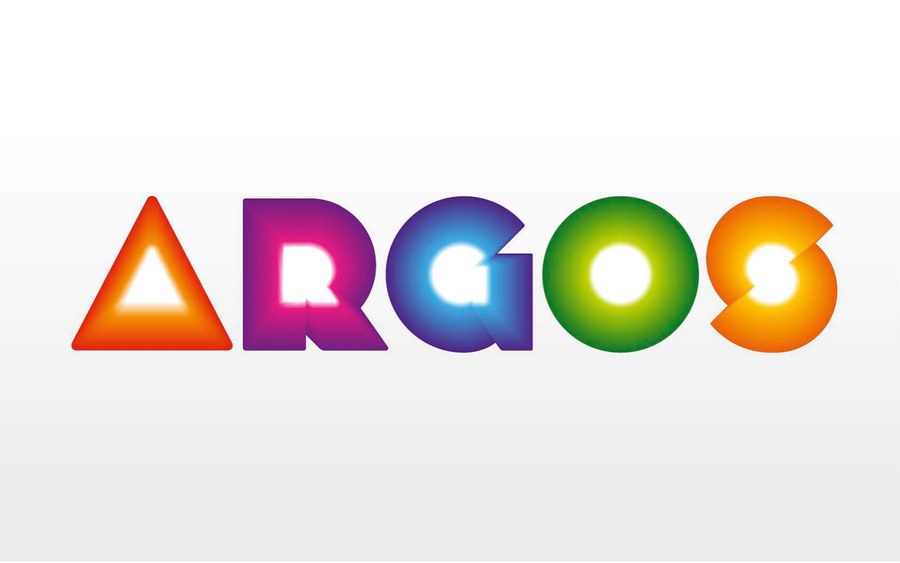
A personal reflection on the £120m sale of Argos, the SuperRetail reframe built a decade ago to take it somewhere else entirely - and why the hardest part of brand strategy is staying brave enough, for long enough, to let it happen.
“You can build the right reframe, get executive buy‑in, win awards, and still watch the business quietly choose not to be brave with it.”
Sainsbury’s is selling the core Argos retail business for £120m. It paid £1.4bn for it ten years ago.
That gap isn’t the whole story - Argos Financial Services has been sold off separately, for a lot more - but it’s the kind of number that will make people write hot takes about retail decline. All fair. But I keep coming back to a different question, because this one’s personal.
Back in 2014, while working at WPP’s brand consultancy The Partners, I was engaged by Argos’s then senior leadership team to lead the translation of the CEO’s five‑year ambition - reinventing Argos as a digital retail leader - into a brand narrative and strategy that could actually carry it, and sustain it, into the new frontiers of retail.
Argos was a nostalgia brand, an emergency destination. A mid‑market value brand, but not one for the digital natives of the time. And yet as a UK catalogue retailer, Argos was a category of one. The challenge was how to reframe itself for a digital future while holding onto that category‑of‑one position - rather than becoming just another digital retailer competing on micro‑advantages.
Aligned with the wider transformation programme - a digital revamp across a cross‑section of stores, a new own‑brand architecture - the work we developed was built around a narrative and platform we called SuperRetail. It positioned Argos not as a participant in an existing category, but as a business with a genuinely unique combination of digital reach, physical footprint and fulfilment speed that no single competitor, online or high street, could match.
The work culminated in a brave and distinctive identity change to support the transformation.
I remember the final presentation to the then CEO of Home Retail Group. Months of development, consumer research, leadership socialisation. Everything ready to go.
At the final say, they decided against the brand identity transformation. Unknown and undisclosed at the time, was whether the sale to Sainsbury’s was in play.
I say all this not to relitigate old work, but to question whether the strategic logic at the time still holds up a decade later. The idea wasn’t wrong.
Argos genuinely did have the ingredients - instant fulfilment before “instant” was table stakes, a trusted high‑street presence, an early and serious digital operation - to be something categorically different from where it ended up.
What strikes me now is that the brand itself never got to say that or to truly be that.
The Argos I recognise from the last decade is the same Argos, just slightly more digital - slotted into Sainsbury’s stores, running Nectar points and Habitat concessions, and now sold off as a business that press reports say lost £223m last year and is still shrinking.
Whatever was decided internally after 2016 - and I’m not close enough to the last decade of leadership calls to say precisely what - the visible evidence is of a brand with potential upside that was managed for business maintenance, not brand growth. Folded in, rather than let loose. A wannabe digital retail leader without the courage of conviction to champion the SuperRetail charge.
This is the part of brand strategy work that’s uncomfortable to talk about honestly: you can build the right reframe, get executive buy‑in, win awards, and still watch the business quietly choose not to be brave with it.
Not through any single bad decision - more through the accumulation of smaller ones. Keep the brand recognisable to the core customer base. Don’t disrupt the store estate. Don’t spook the market. Each one defensible. The sum of them is a brand that never got permission to be what the strategy intended it to become.
I don’t know if SuperRetail, fully committed to, would have changed where Argos ended up today. Retail economics are brutal, and brand positioning alone doesn’t save a business from a collapsing discretionary spending environment or an Amazon‑shaped competitor. But there’s a difference between a strategy that was tried and failed, and one that was right and never sustained. Argos, to me, looks like the second.